Oilfield Acidizing Drilling Hoses: Core Guarantee for Fracturing Fluid Transport Under Extreme Condi
2026-08-26 14:08:59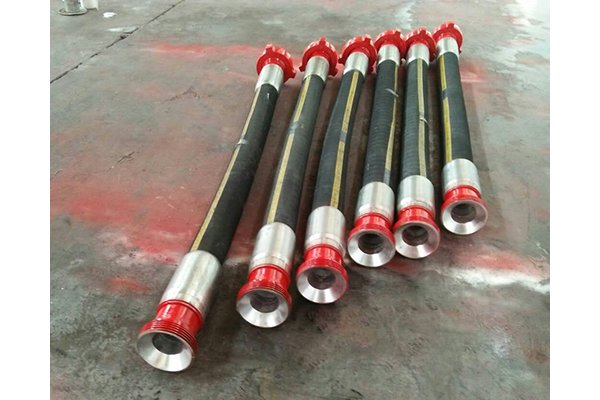
Solving a Long-Standing Pain Point in Fluid Transport During Acidizing Operations
In oilfield acidizing and fracturing operations, traditional delivery hoses have long faced the challenge of multiple overlapping operating conditions: highly corrosive acidizing fluids such as high-concentration hydrochloric acid and corrosion inhibitors continuously erode the pipe wall; abrasive particles like quartz sand and ceramic pellets mixed in the fluid erode the inner rubber layer at high speeds of tens of meters per second; coupled with the high-frequency high-pressure pulse impacts during operations, ordinary hoses often experience problems such as inner rubber layer peeling, bulging, pipe bursting, and outer layer wear after only a few dozen hours of continuous operation. If failure occurs mid-operation and drilling stops, the loss in a single hour of operation far exceeds the purchase cost of several hoses. The emergence of oilfield acidizing drilling hoses specifically overcomes the three major performance barriers of "strong corrosion resistance, high wear resistance, and overpressure resistance," becoming a core piece of equipment for ensuring continuous and stable fluid transport in current oilfield acidizing operations.
Multi-layer Composite Structure Design Logic for Adapting to Various Working Conditions
The reliable performance of this hose stems from its multi-layer composite structure system, completely customized for oilfield acidizing scenarios. The inner rubber layer uses a special modified polymer material resistant to strong acids and alkalis, capable of withstanding continuous immersion in 20% hydrochloric acid and complex acidizing fluids without swelling, corrosion, or cracking. It also incorporates highly wear-resistant silicon carbide filler, resisting prolonged high-speed erosion by fracturing abrasives, resulting in a wear life more than three times that of ordinary rubber hoses. The intermediate reinforcing layer uses multiple layers of high-strength steel wire wound at staggered angles, combined with an overall pre-tightening force balancing process, to stably withstand ultra-high pressure loads of 15000PSI-20000PSI. Under the high-frequency pulse impact of fracturing operations, there will be no issues with loose steel wires or structural deformation. The outer layer uses a special synthetic rubber resistant to oilfield contaminants and UV radiation, resisting well site debris dragging, sun exposure, and low-temperature freeze-thaw cycles. Even in the frigid environment of -40℃ in northern oilfields, it maintains good flexibility and will not become brittle or crack.
Bringing Comprehensive Benefits to Oilfield Projects
The large-scale application of acidizing drilling hoses in oilfield operations creates significant value for oilfield projects in three dimensions: safety, efficiency, and cost. In terms of safety, the hoses' explosion-proof and corrosion-resistant properties have been verified under all operating conditions, significantly reducing the probability of sudden leaks and hose ruptures during operations. This avoids equipment damage and personnel accidents caused by splashes of highly corrosive acidizing fluids, greatly reducing the pressure on on-site safety management. In terms of efficiency, the continuous trouble-free operation time of a single hose is increased to hundreds of hours, significantly reducing the frequency of drilling stoppages for hose replacements. The effective operating time of the entire fracturing unit can be increased by more than 15%, and the completion cycle of a single well is significantly shortened. In terms of cost, although the purchase cost of a single specialized acidizing drilling hose is higher than that of ordinary hoses, the usage cost per unit of operating time is reduced by more than 40%. It also eliminates the losses from hoisting, labor, and drilling stoppages caused by frequent hose replacements, resulting in considerable overall cost savings for oilfield projects in the long run.