Choose EPDM Chemical-Resistant Rubber Hoses: Don't Use the Experience of Ordinary Oil-Resistant Hos
2026-09-22 14:50:40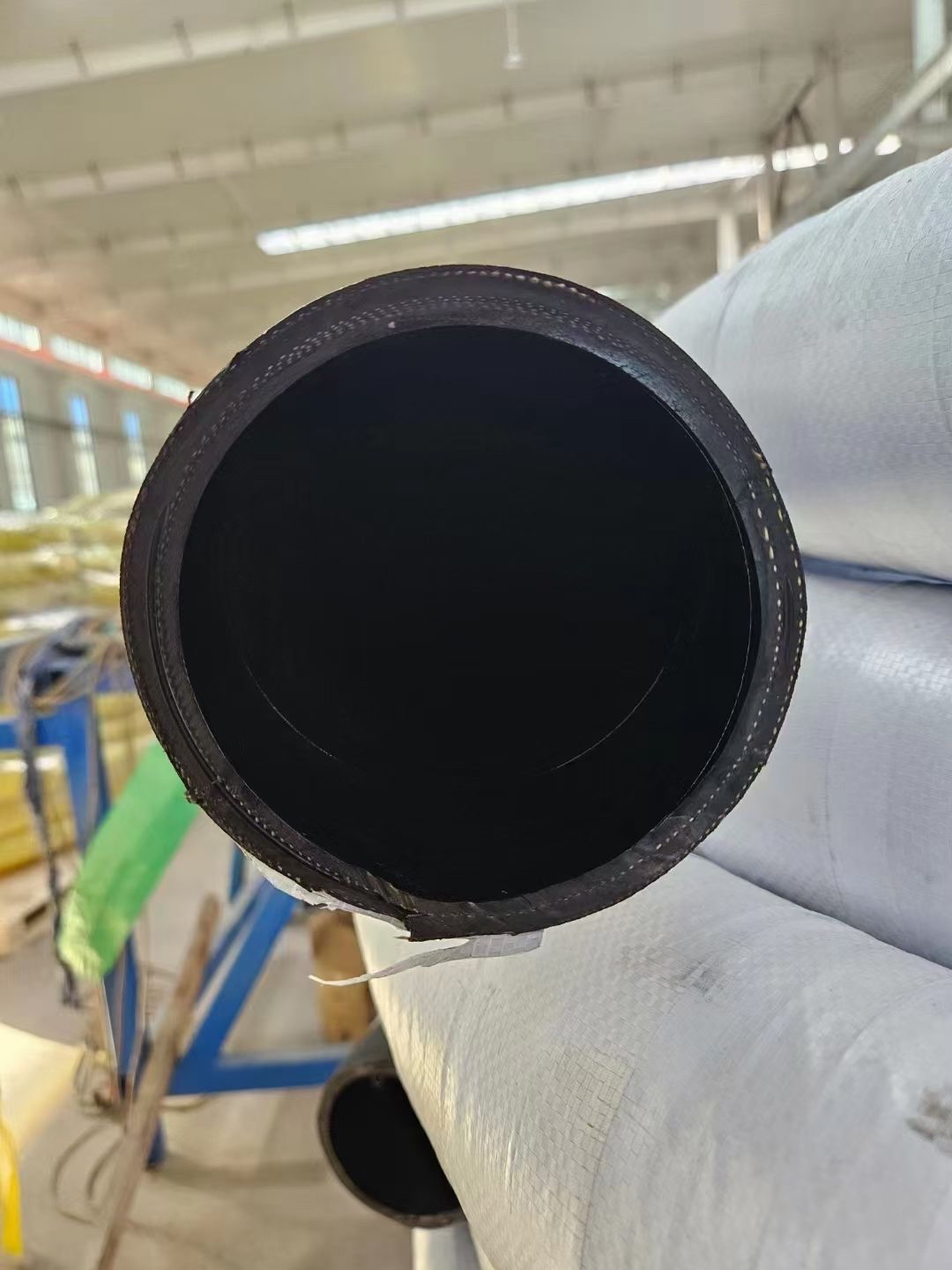
Common Purchasing Misconception: Labeled Corrosion-Resistant ≠ Suitable for Polar Chemical Media Scenarios
Many industrial purchasing personnel habitually apply the selection logic of ordinary oil-resistant rubber hoses when choosing corrosion-resistant conveying hoses, assuming that as long as it is labeled "corrosion-resistant," it can be directly used to transport various acids, alkalis, and polar chemicals. However, after actual deployment, it is quickly discovered that many ordinary corrosion-resistant rubber hoses exhibit problems such as inner layer swelling and outer layer cracking in polar media scenarios such as weak acids, weak alkalis, and water vapor within less than a month of operation. This not only leads to media leakage and material loss but may also cause contact safety hazards.
EPDM chemical-resistant rubber hoses are designed for operating conditions that ordinary oil-resistant rubber hoses are completely unsuitable for: polar fluid transportation in chemical workshops, outdoor water treatment pipelines, high-temperature condensate transportation in HVAC systems, and steam sterilization in food processing scenarios. The media are mostly polar substances such as water, water vapor, weak acids, weak alkalis, and phosphate ester hydraulic oils. Ordinary nitrile-based oil-resistant rubber is prone to rapid performance degradation when in contact with these media for a long time, and simply cannot meet the requirements for long-term stable operation.
Inherent Advantages of Molecular Structure, Fundamentally Meeting Core Needs for Weather and Chemical Resistance
The performance of qualified EPDM chemical-resistant rubber hoses stems from the inherent molecular structure characteristics of the material itself. The main chain of EPDM rubber consists of fully saturated carbon-carbon single bonds, exhibiting extremely high chemical stability. Its resistance to ozone and ultraviolet radiation far surpasses that of ordinary rubber. Even after long-term outdoor use, it will not experience rapid cracking or aging, making it highly suitable for water supply and drainage, and outdoor fluid transportation scenarios exposed to natural environments.
The inner layer is made of pure EPDM vulcanized molding, demonstrating excellent anti-swelling capabilities against polar media such as water, water vapor, weak acids, weak alkalis, and phosphate ester hydraulic oils. Long-term transportation will not result in inner layer decomposition or media penetration, preventing contamination of the transported fluid. The middle fiber braided or steel wire reinforcement layer is designed to adapt to different pressure levels, providing sufficient pressure resistance while ensuring flexibility, adapting to transportation needs across all scenarios from low to medium pressure. The outer layer also uses an EPDM weather-resistant formula, further enhancing its overall resistance to UV rays and ozone aging, ensuring a stable service life for several years even under outdoor sun and rain conditions.
Stable service across all scenarios significantly reduces the overall operation and maintenance costs of fluid transportation.
In many outdoor water treatment and chemical additive transportation scenarios, the average service life of ordinary rubber hoses is only six months to one year. Frequent pipeline replacements not only consume a lot of manpower, but the cleanup and material losses caused by media leaks are often several times the purchase cost of qualified EPDM hoses.
Before leaving the factory, EPDM chemical-resistant rubber hoses undergo hundreds of hours of media immersion verification and ozone aging resistance testing to ensure stable structural performance even under long-term contact with polar media and outdoor exposure. With targeted selection guidance, such as prioritizing weather-resistant fiber braided models for outdoor water supply and drainage scenarios and steel wire reinforced corrosion-resistant models for weak acid transportation in chemical workshops, the overall service life of the hose can be increased by 2-3 times, significantly reducing the frequency of on-site pipeline replacements and lowering the long-term operation and maintenance costs of fluid transportation systems.