Hidden Degradation of Wastewater Treatment Pipelines: Why Ordinary Hoses Don't Last More Than Six M
2026-10-12 14:00:17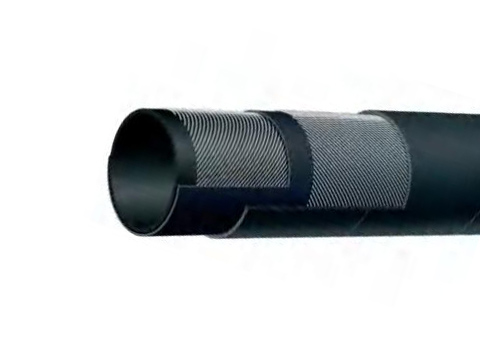
Many wastewater treatment plant maintenance personnel have encountered similar problems: the hoses connecting equipment in the workshop begin to show signs of hardening, cracking, and leaking at joints within a few months. In severe cases, pipes may even burst, causing wastewater leakage. This not only requires emergency shutdowns for repairs but may also trigger environmental compliance risks. Wastewater treatment conditions are far more demanding than ordinary transportation scenarios: the medium contains a mixture of acidic and alkaline agents, sludge particles, and oil impurities. The pipelines are constantly immersed in a humid environment and must withstand frequent positive and negative pressure switching. Ordinary PVC pipes or inferior rubber hoses simply cannot withstand this complex corrosion, often unknowingly becoming the weakest link in the entire wastewater treatment system.
Directed Composite Structure Design, Adapting to the Multiple Corrosions of Wastewater Scenarios
From the initial design stage, industrial wastewater treatment hoses have undergone comprehensive performance enhancements to address the complex operating conditions of wastewater treatment. The pipe wall employs a multi-layered composite structure: the inner layer uses a special high-polymer material resistant to acids, alkalis, and hydrolysis, ensuring it won't corrode or swell even in direct contact with wastewater; the middle layer incorporates a high-strength steel wire or synthetic fiber braided reinforcement skeleton, capable of withstanding the positive pressure during pumping and preventing the pipe wall from collapsing when pumping sludge; the outer layer uses an aging-resistant and tear-resistant protective material, preventing rapid aging and cracking even under prolonged exposure to sunlight and humid conditions. The entire structure is designed specifically for the complex and corrosive environment of wastewater treatment, fundamentally solving the pain points of ordinary flexible hoses that are "unsustainable and break quickly."
Full-Scenario Coverage, Adaptable to the Entire Wastewater Treatment Process
This industrial hose is suitable for almost every stage of the wastewater treatment process: In the influent pretreatment stage, it can be used to transport raw water carrying large amounts of silt, and the high wear resistance of the inner layer can withstand long-term erosion by solid particles; in the chemical dosing room, it can safely transport acid and alkali flocculants and neutralizing agents without being corroded or leaking by chemical media; in the sludge dewatering stage, it can suction high-concentration sludge under high negative pressure without causing pipe collapse or blockage; in the aeration system's supporting pipelines, it can transport pressurized air for extended periods, operating stably even in humid pool environments. Even in the challenging wastewater treatment scenarios of chemical industrial parks, the inner layer material formula can be adjusted to meet the transportation needs of highly corrosive wastewater.
Long-Term Cost Reduction and Efficiency Improvement, Reducing Unplanned Downtime and Environmental Risks
Many wastewater treatment plants have seen a significant reduction in pipeline maintenance frequency after replacing their hoses with compliant industrial wastewater treatment hoses. Previously, a batch of aging and failed hoses had to be replaced every quarter. Now, qualified industrial-grade hoses can operate stably for several years, significantly reducing spare parts procurement and labor replacement costs. More importantly, the probability of hose bursts and sewage leaks has been reduced to a minimum. There is no longer any need to worry about sewage overflows or exceeding environmental standards due to pipeline failures. It also reduces the risk of system downtime due to emergency repairs, allowing the entire sewage treatment system to maintain a stable and efficient operating state for a long time, providing reliable pipeline support for sewage to meet discharge standards.