Oilfield Acidizing Operation Hose – Technological Iteration Drives Upgrades in Oil and Gas Extractio
2026-11-04 14:16:36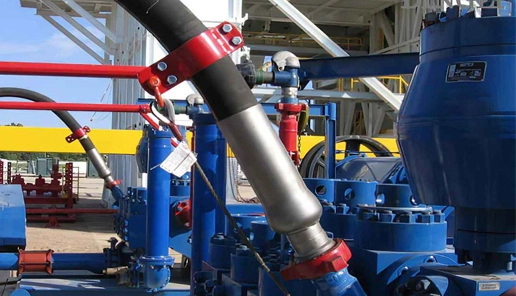
Industry Demands Drive Continuous Product Technology Upgrades
As domestic oil and gas extraction gradually extends to deep wells, ultra-deep wells, and complex conditions with high sulfur content, the performance of traditional acidizing operation hoses can no longer meet the increasingly stringent construction requirements. The entire industry is experiencing rapid technological iteration. In the past, many small and medium-sized oilfields used ordinary acidizing hoses with short service lives under high pressure and strong corrosion conditions. Frequent replacements not only slowed down the construction pace but also brought significant safety hazards. Now, with continuous breakthroughs in special rubber modification technology and high-strength skeleton material processes, the comprehensive performance of the new generation of acidizing operation hoses has been qualitatively improved. They can adapt to the acidizing and fracturing needs of ultra-deep wells at depths of 4500 meters or even deeper, providing crucial pipeline support for the efficient extraction of complex oil and gas reservoirs.
Material Formulation Breakthroughs Solve Extreme Working Condition Challenges
The performance improvement of the new generation of acidizing operation hoses stems from technological breakthroughs in material formulation. By adding nano-modified particles to the rubber matrix, the molecular structure of the rubber compound becomes denser, forming a labyrinthine barrier that significantly extends the penetration path of corrosive media and harmful gases. Hydrogen sulfide permeability is reduced by two orders of magnitude, resulting in a significant improvement in corrosion resistance in high-sulfur environments. Simultaneously, the use of a new synthetic rubber formulation further broadens the temperature range of the hose. Even in extreme temperature environments ranging from -46℃ to 150℃, it maintains good flexibility, avoiding low-temperature hardening and cracking, and high-temperature softening and deformation. In field tests on ultra-deep well projects such as the Tarim Basin, the new acidizing hose exhibited an extremely low coefficient of expansion at a high temperature of 132℃, showing no deformation throughout the process, and its operational stability far surpasses that of traditional products.
Process Optimization Significantly Improves Construction Efficiency
In addition to material upgrades, optimization of production and connection processes has also significantly improved the on-site user experience of acidizing hoses. The one-piece molding process for long lengths reduces the number of joints, significantly lowering the risk of media leakage, while simultaneously improving the overall structural strength of the product. The application of the new quick-connect coupling system, through a patented locking mechanism, enables pipeline connections to be completed within 30 seconds. Compared to traditional bolt fastening methods, this increases connection efficiency by six times. Pipeline installation work that previously took hours can now be completed in tens of minutes, significantly reducing the overall time required for single-well acidizing operations. Actual application data from numerous oilfields shows that after adopting the new generation of acidizing hoses, single-well acidizing operation time has been reduced by nearly 20%, and downtime due to pipe damage has been eliminated, resulting in a significant improvement in construction efficiency.
The industry is evolving towards intelligentization.
In the coming years, the acidizing hose industry will continue to develop towards intelligentization and full lifecycle services. Acidizing hoses integrating intelligent sensing modules are gradually being implemented, capable of real-time monitoring of pressure and temperature changes within the hose, as well as corrosion and wear. They can issue immediate warnings in the event of a potential leak, transforming reactive repairs into proactive prevention. The industry's business model is also gradually shifting from single product sales to integrated solutions encompassing "products + monitoring + operation and maintenance." By leveraging real-time operational data collected through the Internet of Things (IoT), customized operation and maintenance recommendations are provided to oilfield users, further reducing pipeline maintenance costs for acidizing operations and offering greater technical support for cost reduction and efficiency improvement in domestic oil and gas extraction.