Why Crude Oil Transportation Requires More Rigorous Pipeline Testing Than Refined Oil Transportation
2026-11-04 13:57:57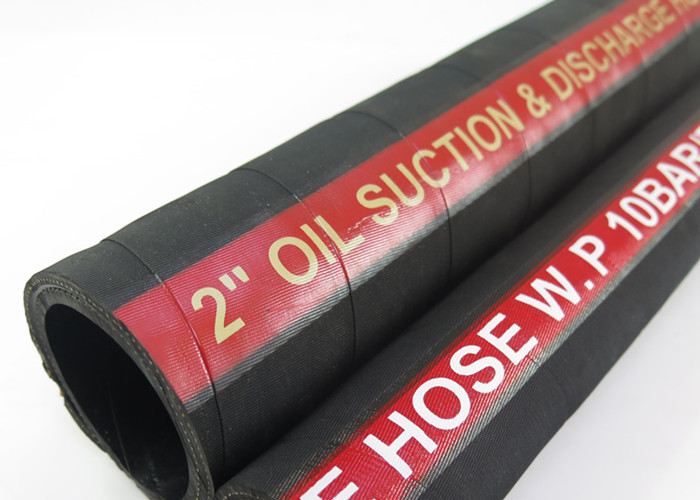
Many maintenance personnel have a misconception that transporting crude oil is similar to transporting gasoline and diesel, and therefore the requirements for pipe materials should be on the same level. However, the operating conditions for crude oil transportation are actually much more demanding. Crude oil has high viscosity and a high pour point, resulting in poor fluidity at room temperature. Many scenarios require heated transportation, and the pipe body is constantly exposed to the dual environment of high-temperature oil and repeated temperature changes within the pipe wall. Crude oil generally contains waxes, asphaltenes, mechanical impurities, and sand particles extracted from the formation, causing far greater wear and erosion to the inner layer of the pipe wall than refined oil. Some oilfield crude oil also contains corrosive components such as hydrogen sulfide, placing additional demands on the corrosion resistance of the materials. Even more critically, crude oil transportation often occurs in less than ideal environments such as field well sites and gathering stations, where the pipe body must be dragged, bent, and subjected to repeated operations at low or high temperatures. Using an ordinary refined oil hose for this task often wouldn't last long.
Multi-layer composite structure, layer-by-layer reinforcement for heavy oil and sand-containing conditions
The crude oil transportation hose adopts a targeted composite structure design. The inner layer uses an oil-resistant and swelling-resistant synthetic rubber formula, which will not swell or delaminate even after long-term contact with crude oil, while also being resistant to waxes and asphaltenes. The middle layer consists of a reinforced skeleton made of multiple layers of high-strength steel wire wound or woven together, which not only bears the transportation pressure but also resists fatigue wear caused by pressure pulsation. Spiral steel wires are added in necessary situations to support negative pressure suction operations. The outer layer uses wear-resistant and weather-resistant protective rubber to resist friction from sand and gravel in the field, UV aging, and occasional oil contamination. The pipe wall maintains a full-bore design to reduce the retention and deposition of high-viscosity crude oil inside the pipe, avoiding flow rate decline after long-term use. The entire structure is configured layer by layer around the four crude oil operating conditions of "high temperature, high viscosity, sand content, and corrosion content."
From wellhead to gathering and transportation station, covering key nodes in crude oil flow. The adaptability of this type of hose covers the main stages of crude oil production and gathering and transportation. Between the wellhead and the metering station, it serves as a flexible connection section, absorbing vibrations generated by the operation of the pumping unit and screw pump, protecting upstream rigid pipes and instruments. Inside the gathering and transportation station, it connects the pump outlet to the storage tank, undertaking short-distance, high-flow-rate transfers. During oil truck loading and unloading, it connects to the tank outlet at one end and the pump at the other, pumping crude oil from the well site tank to the transport vehicle. In well workover and well washing operations, it is used to transport wellbore return fluid and oily wastewater. The pressure, temperature, and media characteristics vary significantly at different points; therefore, these hoses are typically classified into multiple specifications based on pressure rating, diameter, and inner layer material, requiring precise matching based on actual working conditions on-site, rather than using a single universal pipe for all locations.
Reducing Leakage and Safety Risks at the Source: The cost of crude oil leaks goes far beyond the loss of a few barrels of oil. Crude oil seeping into the soil and groundwater causes long-term environmental damage, and the volatilized light components can trigger accidents when exposed to ignition sources in the field. The cost of cleanup and repair is often several times that of the pipeline itself. Compliant crude oil transport hoses are designed with safety margins, and the joints are formed using an integral crimping process to avoid weak points created by temporary on-site binding. Each hose undergoes static pressure and burst testing before leaving the factory. For scenarios like crude oil transport where leaks are costly, allowing sufficient margins in the design and ensuring a tight seal at the connection point is the most practical approach for long-term stable operation.