A Practical Guide to Choosing and Maintaining a Four-Inch Oil Suction Hose
2026-10-29 13:54:02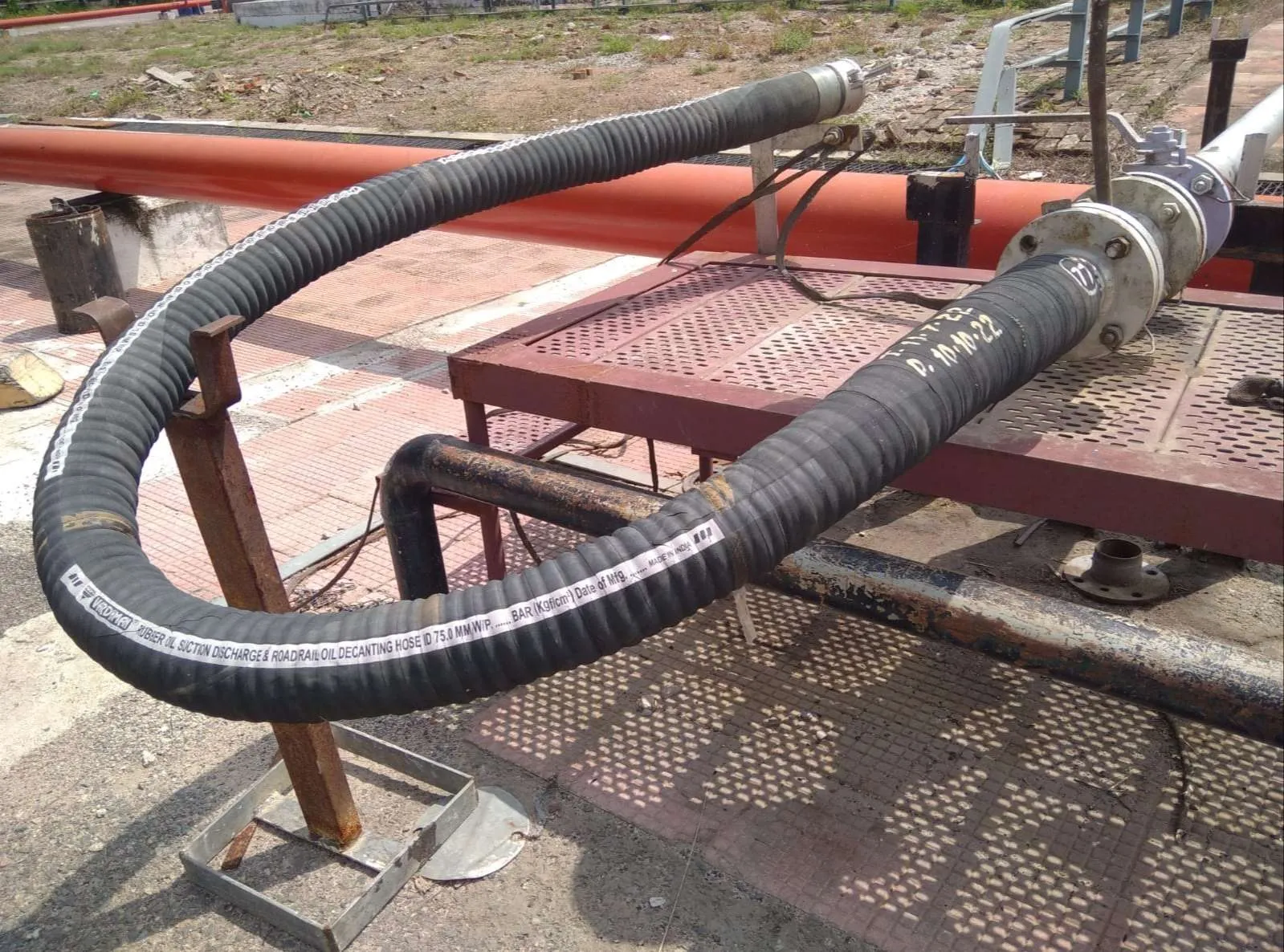
The First Mistake: Equating "Black Rubber" with "Oil Hose"
Procurement decisions often go wrong at the very first step, when a four-inch hose is selected purely by appearance. Black rubber is not a material specification, and an ordinary industrial hose looks almost identical to a purpose-built suction and discharge line. The difference only becomes visible in service, when a general hose collapses under vacuum or swells and softens after weeks of contact with fuel. The remedy is straightforward but requires discipline: ask what the hose is designed to do, not what it looks like. A product intended for vacuum service should state its vacuum rating explicitly. A product intended for fuel should state its compatibility with the specific products it will carry.
Four Criteria That Separate a Fit Hose from a Misfit
When evaluating a four-inch suction and discharge hose, four criteria do most of the work. First, vacuum capability: the hose should maintain its bore at the vacuum level the pump can generate, without collapsing. Second, inner-layer compatibility: the compound should resist swelling in the products being handled, whether that is gasoline, diesel, crude, or a blend. Third, reinforcement adequacy: the wire and plies should be sized for the hose's diameter and for both the suction and discharge pressures expected. Fourth, environmental fit: outdoor service calls for UV-resistant cover compounds, cold climates call for formulations that remain flexible below freezing, and marine locations call for resistance to salt-laden air.
Installation Choices That Determine Service Life
How a hose is installed often matters more than its specification sheet. A hose pulled taut between two fixed points has no freedom to accommodate movement, so every vibration and shift loads the fittings. A hose bent tighter than its minimum radius places concentrated stress on the reinforcement. A hose dragged over sharp edges or repeatedly run over by vehicles develops outer-cover damage that eventually reaches the reinforcement. Best practice is to leave a little slack, respect the bend radius, protect the cover from abrasion, and use properly engineered fittings rather than improvised clamps. These are simple habits, but they routinely double the useful life of a hose in active service.
A Word on Chemical Compatibility
Oil resistance is not universal chemical resistance. The synthetic rubber used in fuel hoses is selected for compatibility with petroleum products, but it is not suited to every fluid a crew might encounter. Strong acids, concentrated bases, ketones, and esters can attack the inner layer rapidly, causing it to soften, blister, or disintegrate. When a hose will carry something other than ordinary fuel, that fluid should be checked against the hose's stated compatibility before the line is put into service. This one precaution prevents a category of failures that otherwise appear mysterious.
Condition Monitoring and Planned Replacement
A hose does not fail without warning; it fails after a period of visible decline that crews can learn to read. Soft spots signal that the internal wire has deformed. Blisters or bulges indicate that reinforcement has been compromised. Cracks in the cover, particularly in sunlight-exposed areas, mark the beginning of environmental aging. Leaks at the fittings point to seal or swage problems rather than hose failure. Operators who track these signs and replace hoses on a planned basis avoid the far more expensive alternative of an unplanned failure — a spill, a stalled transfer, or an incident that turns a routine job into a safety event. Treating a four-inch suction hose as a safety-critical component rather than a disposable item is the single most effective maintenance decision available.