The Real-World Dilemma of Oil and Gas Pipelines: Rigid Pipes Lack Flexibility, Ordinary Flexible Hos
2026-10-29 13:53:39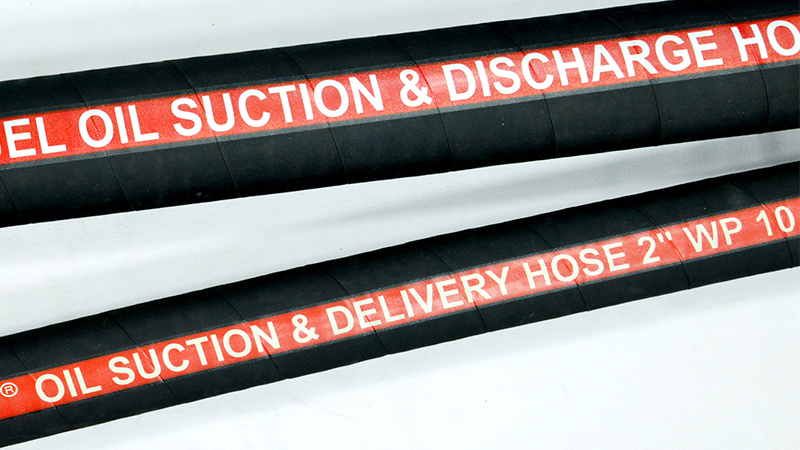
In scenarios such as oil loading and unloading, oil depot transfer, and oilfield gathering and transportation, pipeline selection has long faced an unavoidable dilemma. Rigid metal pipes offer good pressure resistance and oil resistance, but their excessive rigidity makes them unsuitable for conditions requiring frequent connections and relative displacement. Numerous bends and tight welds lead to stress concentration under vibration, making joints prone to cracking and leakage. Ordinary flexible hoses offer sufficient flexibility, but their pressure resistance is insufficient, and the inner layer's oil resistance is limited. After long-term transport of gasoline, diesel, and heavy oil, the inner layer easily swells and hardens, while the outer layer ages and cracks due to repeated corrosion from oil and UV rays. Leaks during loading and unloading not only waste oil but also potentially trigger fire risks and environmental problems. Steel wire reinforced oil hoses are a product developed to resolve this dilemma. They retain the flexibility of regular hoses while using a steel wire reinforcement structure to elevate pressure resistance and fatigue resistance to industrial-grade levels.
Multi-layered composite structure enables pressure resistance, oil resistance, and weather resistance simultaneously.
The steel wire reinforced oil hose features a multi-layered composite design from the inside out, with each layer serving a specific function. The inner rubber layer, in direct contact with the oil, typically uses oil-resistant formulations such as nitrile rubber, hydrogenated nitrile rubber, or fluororubber, providing sealing and resistance to media corrosion while protecting the internal steel wires from oil and moisture. The middle reinforcing layer, composed of multiple layers of high-strength steel wire wound at a specific angle into a mesh skeleton, is the key layer determining the hose's pressure limit and pulse fatigue life, and is the core difference between it and ordinary fiber-reinforced hoses. The outer rubber layer often uses neoprene rubber or weather-resistant synthetic rubber, responsible for resisting abrasion, ozone, ultraviolet radiation, and external mechanical damage. This entire structure allows the hose to maintain flexibility while withstanding high transmission pressures for extended periods, and is less prone to fatigue failure of the reinforcing layer even under conditions of frequent pressure fluctuations.
Full-scenario adaptability, covering typical operational stages of oil and gas transportation.
The adaptability of this type of hose spans multiple stages of oil and gas storage and transportation. In oil depot loading and unloading areas, it serves as a flexible connection between storage tanks, pump outlets, and tank trucks, absorbing stress from pump vibrations and vehicle displacement. In ports and docks, it handles high-volume oil transport between ships and shore, automatically compensating for displacement as the ship rises and falls. At oilfield gathering and transportation sites, it's used for short-distance flexible transfer between wellheads, metering stations, and main pipelines, adaptable to heavy oil and media containing trace impurities. In engineering machinery and marine power systems, it's also used for transporting hydraulic oil, fuel oil, and lubricating oil. The same type of product is available in multiple specifications based on pressure rating, diameter, and inner layer material, allowing for precise matching based on media characteristics and pressure requirements on-site, rather than forcing a single specification to handle all working conditions.
Long-term cost reduction, minimizing leakage risks and maintenance burden
Compared to repeatedly replacing low-priced hoses, compliant steel wire reinforced oil hoses are often more economical in the long run. On the one hand, it has a longer fatigue life, reducing unplanned downtime and replacement frequency caused by pipeline aging; on the other hand, the joint is formed by integral crimping, resulting in higher sealing reliability, reducing the risk of leakage, and correspondingly reducing oil consumption and on-site cleanup costs. For scenarios like oil transportation, which have high safety and environmental protection requirements, treating pipelines as pressure-bearing components managed on a periodic basis, rather than consumables that can be replaced at will, is a more prudent approach.