Multi-condition Adaptability: A Guide to Selecting High-Temperature Chemical Hoses
2026-11-20 10:00:02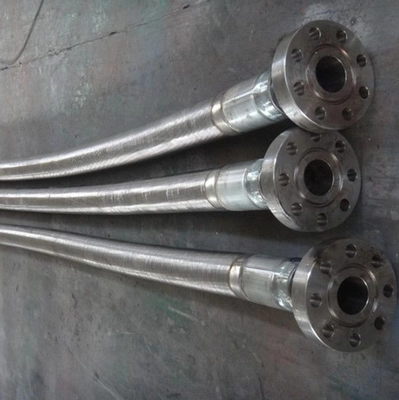
Different Requirements for Different High-Temperature Scenarios
High-temperature fluid transfer scenarios in the industrial field vary greatly, from the removal of high-temperature materials from closed reactors to the transfer of hot media in open plants, and the suction of mobile high-temperature waste liquids. Different scenarios place entirely different emphasis on the temperature resistance, flexibility, and corrosion resistance of hoses. Many companies focus only on a single temperature resistance parameter when selecting hoses, neglecting scenario adaptability. This easily leads to mismatches between hose performance and operating conditions, not only failing to leverage the equipment's advantages but also potentially creating safety hazards. Accurate selection based on scenario characteristics is crucial to maximizing the performance of high-temperature chemical hoses.
Adaptation Solutions for Four Typical High-Temperature Scenarios
For the scenario of removing high-temperature materials from fixed reactors, priority should be given to high-temperature chemical hoses with high temperature resistance and low deformation. These hoses are suitable for long-term continuous operation and can be paired with simple hose supports to share the load, reducing stress on the port joints and ensuring long-term stable connection without frequent disassembly and maintenance. For short-distance high-temperature fluid transfer scenarios within a factory area, general-purpose high-temperature resistant chemical hoses that balance temperature resistance and flexibility can be selected. These hoses adapt to standard site layout requirements, eliminating the need for complex fixed supports and meeting daily batch transfer operations, achieving a good balance between performance and cost. For mobile high-temperature waste liquid suction and transfer scenarios, lightweight high-temperature resistant chemical hoses resistant to repeated bending are prioritized. These hoses are suitable for frequent movement and dragging operations, preventing issues such as interlayer peeling and frame loosening due to repeated bending, and meeting the requirements for flexible multi-point operations. For special chemical scenarios involving extreme temperatures and strong corrosion, high-grade high-temperature resistant chemical hoses with special linings must be selected. These hoses combine ultra-high temperature resistance with compatibility with highly corrosive media, maintaining the integrity of the inner structure even after prolonged contact with high-temperature strong acids and alkalis, preventing corrosion and leakage.
Dual Matching Details for Media and Environment
During the selection process, in addition to confirming media temperature compatibility, the chemical compatibility of the hose lining material with the transported medium must be simultaneously checked to avoid chemical reactions between the medium and the material under high-temperature environments, which could lead to inner layer swelling, corrosion, and damage. Simultaneously, considering factors such as the external temperature of the working environment, the presence of open flames, and the risk of abrasion from sharp objects, hoses with corresponding outer protection levels are selected to improve overall environmental adaptability. For flammable and explosive high-temperature media scenarios requiring anti-static properties, it is also essential to ensure the hose has a complete static discharge structure, meeting explosion-proof operation specifications and preventing safety risks caused by static electricity buildup.
Efficiency Improvement Through Scenario-Based Adaptation
After completing precise scenario-based selection, the adaptability of the enterprise's high-temperature fluid transmission process will be significantly improved. The proportion of non-natural hose damage will decrease significantly, and the connection efficiency of a single batch of transmission operations can be increased by more than 30%, eliminating the need for frequent pipeline adjustments and parts replacements. At the same time, the actual service life of the hose is further extended, reducing maintenance manpower investment and ensuring that every high-temperature transmission operation is in a stable and controllable state, adapting to the differentiated production needs of various chemical enterprises.