Upgrading Ultra-High Voltage (UHV) Operations and Maintenance: The Full-Lifecycle Management Value o
2026-09-07 15:45:34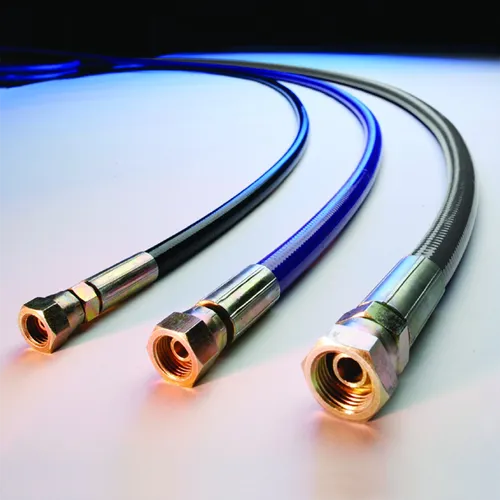
Previously underestimated pipeline components have now become the core of safety in UHV operations.
For a long time, many companies' UHV operation teams focused on core equipment such as UHV pumps and actuators, with relatively lax management of pipeline materials—replacing them when they broke, rarely establishing a dedicated systematic operation and maintenance management system. However, as UHV technology is increasingly widely used in industrial settings, the operational pressure on UHV systems is increasing. A sudden burst of a fiber braided UHV resin pipe can potentially lead to an emergency shutdown of the entire work area, resulting in significant production losses and even directly threatening the personal safety of on-site operators.
Now, more and more UHV operation teams are beginning to include fiber braided UHV resin pipes in their core safety management lists, no longer treating them as unimportant pipeline consumables, but rather using refined full-lifecycle management to significantly reduce the safety risks and probability of unplanned downtime in UHV operations.
From "Replace When It Breaks" to "Preventative Maintenance Dedicated to Ultra-High Pressure Scenarios"
Traditional ultra-high pressure pipe management involves replacing pipes only after the outer layer has worn through, the pipe body has bulged, or it has burst. This approach is prone to sudden safety accidents. The current mainstream maintenance approach has shifted to preventative maintenance based on ultra-high pressure conditions: an independent usage log is established for each fiber-braided ultra-high pressure resin pipe based on the pressure fluctuation frequency, drag wear intensity, and environmental conditions of different operating scenarios. This log records usage time, number of operations, and historical operating conditions, allowing for the pre-setting of corresponding mandatory replacement cycles.
During routine inspections, maintenance personnel can use simple visual inspections and low-pressure pre-tests to promptly detect early potential problems such as outer layer wear, localized micro-bulges, and leakage at joints. These issues can be addressed before a full-blown failure occurs, preventing safety accidents and prolonged downtime caused by ultra-high pressure pipe bursts. This approach does not significantly increase the overall replacement cost of pipes, but it reduces the probability of sudden failures in ultra-high pressure operations by more than 70%.
With comprehensive supporting services, the operational and maintenance threshold for ultra-high voltage (UHV) scenarios is further lowered.
The mature fiber-braided UHV resin pipe supply system has long since moved beyond simply delivering pipes; it now extends to a complete range of supporting services. For different UHV operation scenarios across various industries, it provides corresponding selection guidance, installation specifications, and operation and maintenance training, helping on-site personnel avoid common errors during pipe installation such as excessive bending, torsional stress, and improper joint crimping, thus preventing premature failure due to improper installation.
In some scenarios, customized pre-assembled pipe assemblies can also be provided, with standardized crimping of pipes and UHV joints completed in advance. Each pipe undergoes pressure testing before leaving the factory, allowing for direct on-site installation and use without occupying processing stations at the work site, significantly improving replacement efficiency. This complete support from product to service transforms fiber-braided UHV resin pipe from a hidden risk factor in UHV systems into a reliable support for the long-term safe and efficient operation of UHV systems.