Choose Large-Diameter High-Pressure Hose with Steel Wire Wounds, Don't Use Experience with Small-Di
2026-09-16 10:23:58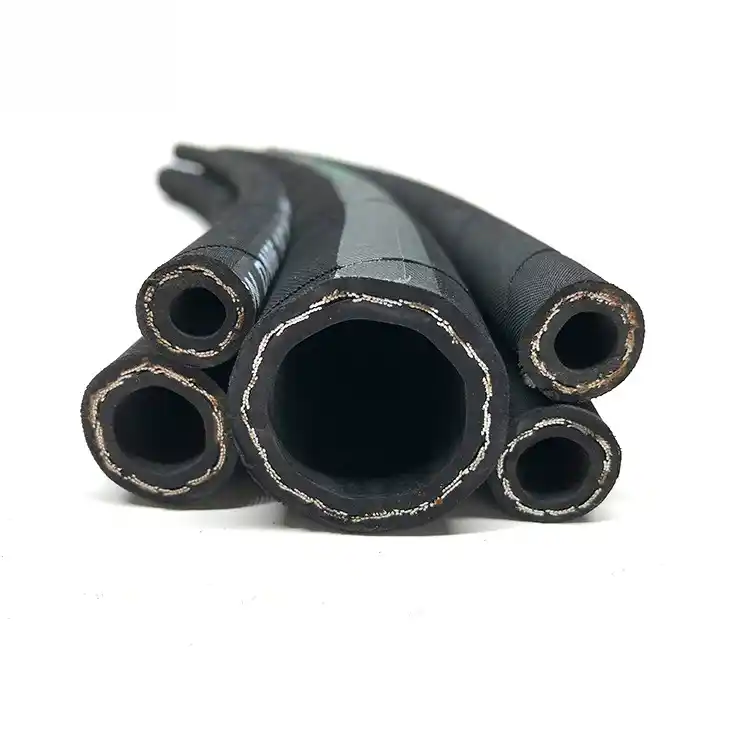
Common Purchasing Misconception: Larger Diameter ≠ Simultaneous Performance Adaptation
Many industrial purchasing personnel habitually apply the selection logic of small-diameter hydraulic hoses when choosing large-diameter high-pressure hoses, believing that as long as the diameter is increased and the number of steel wire layers is sufficient, it will meet the needs of high-flow-rate, high-pressure transmission. However, after actual deployment, it is quickly discovered that many ordinary large-diameter hoses experience problems such as bulging, interlayer peeling, and bursting within three months of operation under high-pressure, high-flow conditions. This not only causes significant media leakage but also potentially threatens the personal safety of on-site operators.
Large-diameter high-pressure steel-wire wound hoses are designed for extreme operating conditions that small-diameter hoses never encounter: fluid supply for hydraulic supports in mines, slurry transportation in port dredging, high-flow hydraulic systems in large engineering machinery, and high-pressure fluid export in the oil and petrochemical industries. A single hose must handle flow rates of hundreds or even thousands of liters per minute, accompanied by continuous high-load pressure impacts. Ordinary braided large-diameter hoses simply cannot meet these performance requirements; forced replacement would only bring extremely high safety and downtime risks.
Multi-layer steel-wire wound structure design, fundamentally adapted to large-diameter high-pressure operating conditions
A qualified large-diameter high-pressure steel-wire wound hose is a special composite system designed entirely around high-flow, high-pressure transportation. The inner layer uses highly elastic, wear-resistant special synthetic rubber, formulated to adapt to different transport media such as slurry, emulsions, and hydraulic oil. Even with long-term high-speed transportation of fluids containing solid particles, the inner layer will not experience rapid wear or tear. The excellent smoothness of the inner wall significantly reduces resistance loss during high-flow media transport.
The middle layer consists of multiple layers of high-strength steel wire winding reinforcement, formed using a high-tension CNC winding process. The winding angle of each layer is precisely calculated mechanically, resulting in a completely uniform stress distribution between layers. This eliminates weak points caused by localized stress concentrations. Under rated high pressure, the circumferential and axial deformation of the pipe body is controlled to a minimum, completely preventing the significant expansion and vibration issues that often occur with large-diameter hoses under pressure. The outer layer is made of a highly wear-resistant and aging-resistant special rubber material. Even after repeated dragging, contact with sharp objects, and oil stains on the construction site, it will not easily break, effectively protecting the internal steel wire reinforcement layer from corrosion and external force damage.
High-reliability, high-flow-rate delivery significantly reduces the overall operation and maintenance costs of large equipment.
In many high-flow-rate, high-pressure delivery scenarios for large industrial equipment, traditional spliced rigid pipes are not only difficult to install but also have poor seismic resistance and displacement compensation capabilities. Vibrations generated during equipment operation can easily lead to cracking and leakage at the pipe joints. The overall weight of large-diameter high-pressure hoses wound with steel wire is significantly lower than that of thick-walled rigid pipes of the same specifications. They possess excellent inherent flexibility, easily adapting to minor displacement compensation during equipment operation without the need for additional complex expansion joints.
Before leaving the factory, each hose undergoes pressure testing at 1.5 times its rated working pressure and thousands of pulse fatigue tests to ensure long-term stable operation under high-flow, high-pressure conditions. With targeted selection guidance, such as prioritizing high-wear-resistant and anti-static models for fluid supply in fully mechanized mining faces and long-length, high-tensile-strength models for port dredging applications, the overall service life of the hose can be increased by more than 2 times, significantly reducing unplanned downtime losses from large equipment.