High-Risk Vulnerability Points on Drilling Platforms: A Single Hose Failure Can Disrupt the Entire W
2026-10-15 13:52:21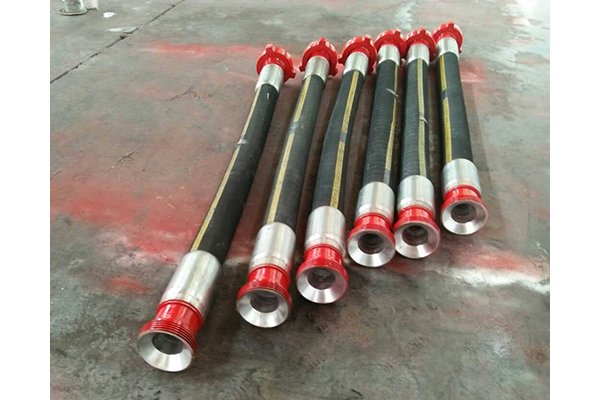
On the drilling site, the flexible connection between the mud pump, riser, and top drive unit is subjected to extreme conditions of high pressure, high-frequency pulses, and intense wear. This section of pipe must withstand the continuous impact of high-pressure mud at thousands or even tens of thousands of psi, repeatedly swing and expand with the top drive at high altitudes, and endure the chemical erosion of oil-based mud and the aging challenges of wind, sand, and sun exposure at the well site. Ordinary high-pressure hoses quickly develop outer layer cracks and joint leaks, and in severe cases, they can even burst, causing a sudden gush of high-pressure mud. This can result in anything from downtime and delays to personal injury and environmental pollution. This seemingly insignificant flexible connection is precisely the most critical and vulnerable point in the drilling operation chain, and drilling hoses conforming to API Spec 7K standards are specialized equipment designed to address this situation.
Multi-layer winding structure for directional reinforcement under high-pressure pulse conditions
The drilling hose features a multi-layer composite directional design. The inner layer uses an oil- and corrosion-resistant synthetic rubber formula selected based on the transported medium, preventing swelling and delamination even after prolonged contact with oil-based and water-based mud. The reinforcing layer employs a multi-layered high-strength steel wire or rope winding structure; this layer determines the hose's maximum working pressure and resistance to pulse fatigue. The outer layer is a wear-resistant and weather-resistant protective rubber layer, resisting sand and gravel friction and UV aging at the well site. The inner diameter is designed for full bore to prevent solid particles in the mud from accumulating and clogging the hose. The entire structure is reinforced around the four core drilling conditions of "high pressure, pulse, abrasion, and corrosion," ensuring the hose remains stable during long-term continuous operation.
Full-process adaptability, covering various flexible connection needs in drilling
The adaptability of this type of hose spans the entire drilling process. Between the pump and the lower end of the riser, it handles the transport of high-pressure drilling mud; between the upper end of the riser and the top drive unit, it repeatedly bends and oscillates with the rise and fall of the top drive; in cementing operations, it acts as a flexible connector in the cementing manifold, transporting cement slurry; in well workover operations, it can also handle the transport of media for high-pressure circulating well washing. The hose is classified into multiple pressure levels according to working pressure, with corresponding specifications for everything from low-pressure to ultra-high-pressure deep well conditions. Users can precisely match the hose to the well depth, pump pressure, and actual working conditions, eliminating the need to purchase high-strength redundant specifications for low-pressure scenarios or to make do with substandard hoses for ultra-deep wells.
Safety Redundancy Design Provides Reliable Backup for Extreme Conditions
Compliant drilling hoses are designed with clear safety redundancy. The test pressure typically reaches 1.5 times the working pressure, and the minimum burst pressure can reach 2.5 times the working pressure. Combined with on-site pressure monitoring, even instantaneous pressure fluctuations can maintain a safety baseline. The joints utilize integral unions or integral flanges, and are formed with the pipe body using high-strength crimping, avoiding the leakage risks associated with on-site assembly. For drilling, a scenario where leaks are extremely costly, this approach of incorporating redundancy from the design stage is precisely the most practical way to ensure safe operation of the entire well.