5000psi: The Typical High-Pressure Range for Flexible Drilling Connections
2026-10-15 13:52:50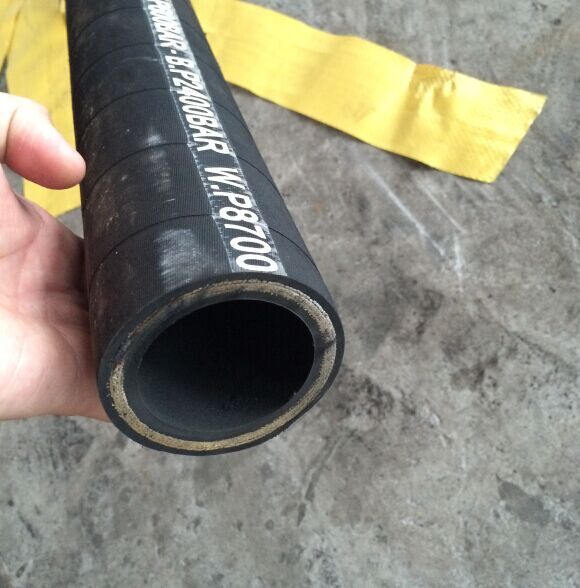
In drilling circulation systems, pressure ratings are never arbitrary. 5000psi translates to approximately 34.5 MPa, a level perfectly positioned between conventional and deep wells—exceeding the applicability of ordinary low-pressure circulation lines, yet not reaching the extreme levels required for ultra-deep wells, which necessitate specifications exceeding 10000psi. For this reason, 5000psi has become the primary choice for many flexible drilling connections. It commonly appears in high-pressure transport links between mud pumps and manifolds, between the upper end of the riser and the top drive, and in flexible connections of cementing manifolds. These locations share common characteristics: high medium pressure, high flow velocity, and the pipe body must repeatedly bend and oscillate with the equipment, representing a typical "high-pressure + dynamic" superimposed operating condition.
Four-Layer Structure Corresponds to Each Operating Condition, Balancing Pressure and Lifespan
The 5000psi-level drilling hose employs a multi-layered composite structure, with each layer addressing a core challenge. The inner layer is made of oil-resistant and chemically corrosion-resistant synthetic rubber or polymer material, ensuring no swelling or delamination during long-term transport of water-based or oil-based mud. The reinforcing layer is composed of multiple layers of high-strength steel wire or rope, the number of layers directly determining the upper pressure limit and fatigue life against pressure pulses—a key difference between the 5000psi specification and lower-pressure products. The outer layer uses wear-resistant and weather-resistant synthetic rubber to resist friction from well site gravel and UV aging. The inner diameter maintains a full-bore design to reduce the deposition of solid particles such as barite, preventing flow rate decay after long-term use. The entire structure is reinforced around four aspects: high pressure, pulse, wear, and corrosion.
The parameter system is clear, and safety redundancy is well-founded.
The technical parameters of the 5000psi hose have a clear correspondence. According to industry standards, a working pressure of 5000 psi corresponds to a test pressure of 7500 psi and a minimum burst pressure of 12500 psi. This means the test pressure is 1.5 times the working pressure, and the minimum burst pressure is 2.5 times. Inner diameters range from 2 inches to 6 inches, with minimum bending radii increasing from approximately 800 mm to 1600 mm depending on the pipe diameter, facilitating selection based on available space. The applicable temperature range is typically between -20℃ and +121℃, covering most environmental fluctuations in onshore well sites. Connections often utilize integral unions or integral flanges, formed with the pipe body using high-strength crimping to avoid leakage risks associated with temporary on-site assembly.
Choosing the right level is crucial for ensuring the safety of the entire circulation line.
For drilling sites, 5000 psi is not just a pressure number, but a quantifiable balance point that quantifies safety redundancy, flow rate, and flexible bending. If the pipe is too small, it will operate near its limits for extended periods, shortening its fatigue life; if it's too large, the pipe will be harder and heavier, making on-site installation and bending more difficult. Matching the pipe to the appropriate pressure rating based on the actual pump pressure, along with standardized connector assemblies and individual pressure testing at the factory, is key to ensuring the overall stability and reliability of this flexible connection section.